.svg)


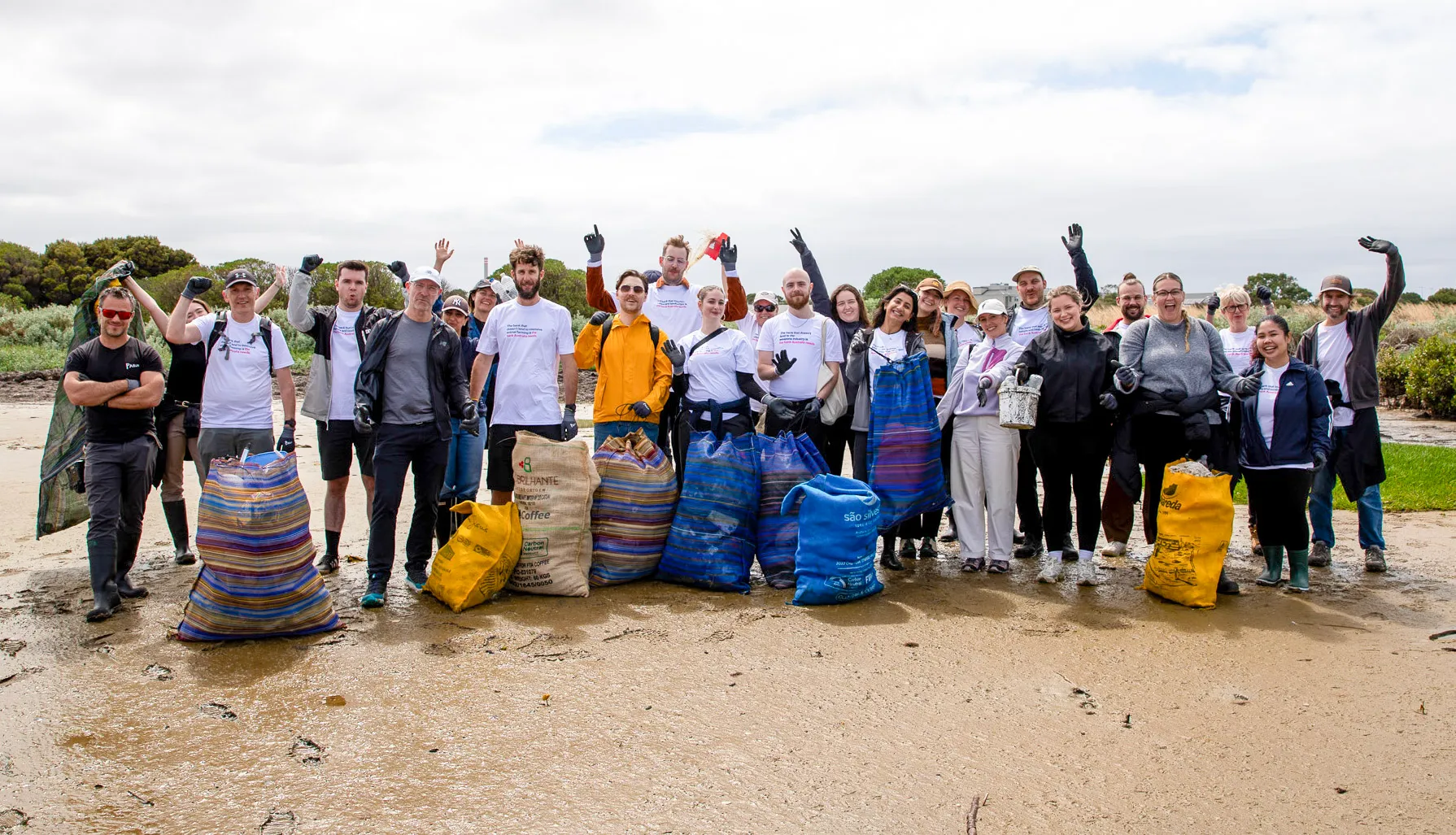


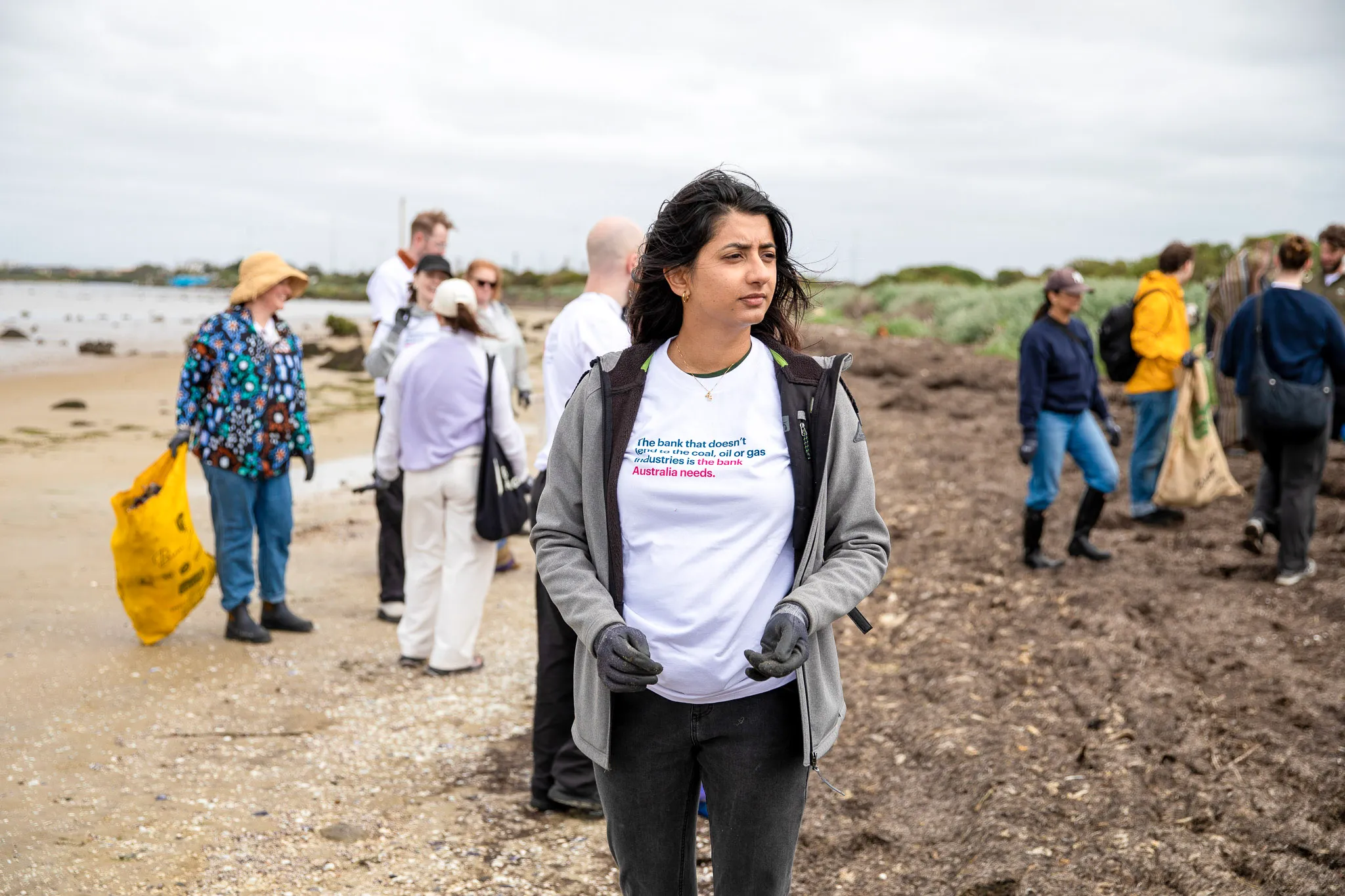
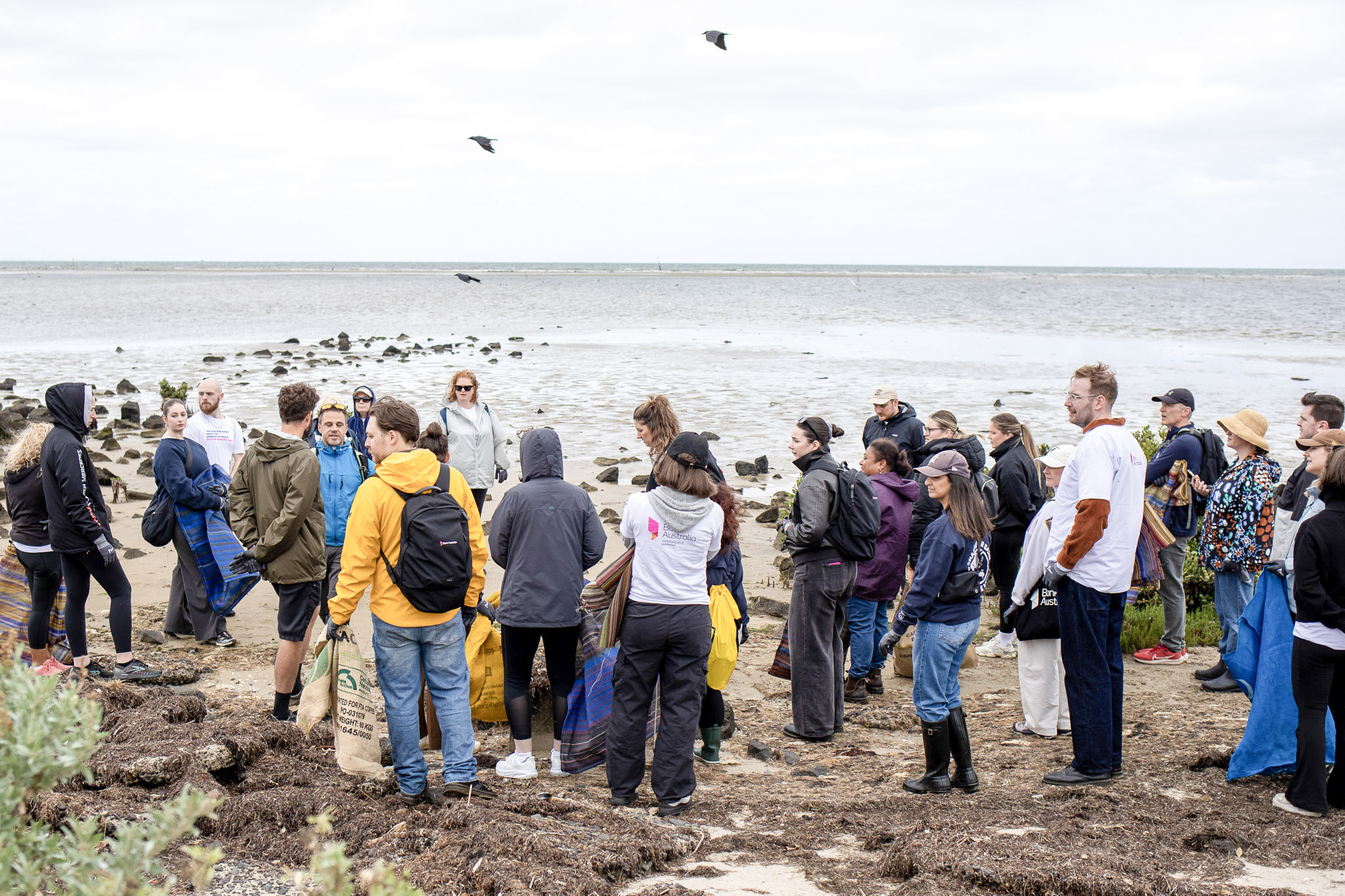
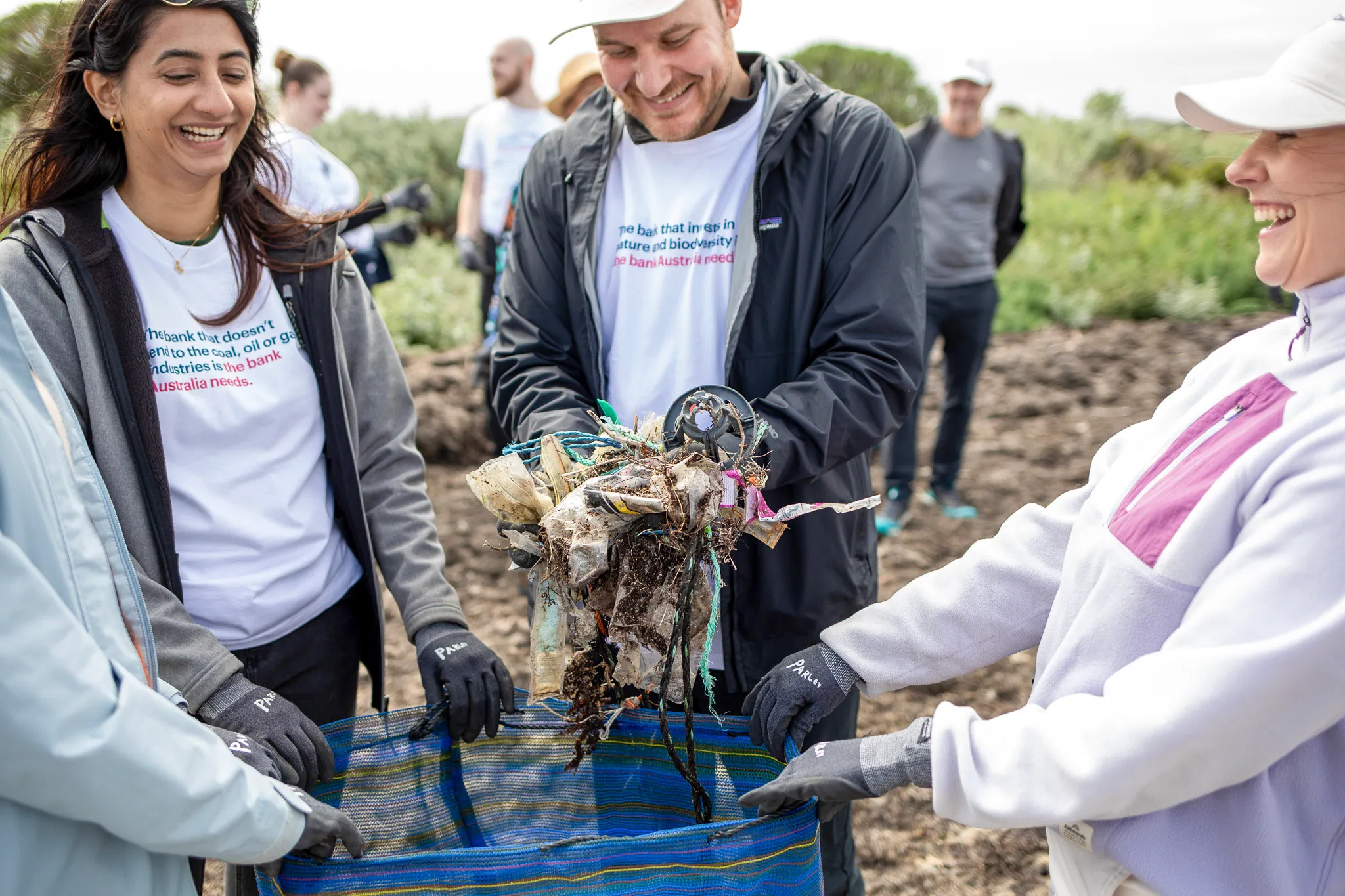
On a recent volunteer day at Jawbone Marine Sanctuary, around 25 Bank Australia staff joined the team from Parley for the Oceans to clean up a stretch of coastline.
By the end of the morning, we’d collected just over 184 kilograms of rubbish.
Shoes. Thongs. Tyres. Rope. Bottles.
Plastic fragments so weathered they almost blended in with the sand and shells.
It was just one small section of coastline in the stunning marine sanctuary located in Melbourne’s Williamstown on Port Phillip Bay, on the traditional lands of the Bunurong (Boon Wurrung) and Woi Wurrung (Wurundjeri) peoples of the Kulin Nation.
“If we collected 184kg in one area, it makes you think about how much is out there beyond what we can see,” says staff member Amber.
“A lot of it wasn’t dramatic. It was broken-down plastic that had just become part of the landscape.”
“I was personally confronted not just by the sheer amount of rubbish in such a small area, but by how much of it was single-use food and drink items and how preventable it all seems,” says another staff member, Imogen.
The sand dunes told a similar story.
Pull a piece of plastic from the dune face and it would often shatter on contact, too brittle to remove whole.
Most of it stayed behind, already forming part of the structure it had no business being in.
That quiet but serious accumulation is what makes the problem difficult to grasp.
This isn’t just about littering
It might be easier to frame marine waste as a behaviour issue. But, realistically, most plastic in circulation was designed to be disposable long before it reached a shoreline, posing a threat to the marine environment.
According to the UN Environment Programme, it’s estimated every day the equivalent of 2,000 garbage trucks full of plastic are being dumped into the world’s rivers, lakes and oceans.
Packaging makes up a significant share, produced, distributed and embedded before individuals ever make a purchase decision.
So, while clean-ups remove what has already escaped into the environment, they don’t address why so much material is created in the first place.
Parley for the Oceans works to intercept plastic waste before it reaches the ocean, partnering with organisations to redesign products, redirect materials, and address the systems that allow plastic to enter marine environments in the first place.
Their model treats plastic found in the environment not as waste to be managed, but as a resource to be reclaimed, built around a three-part strategy they call AIR: Avoid plastic wherever possible, Intercept waste before it reaches the ocean, and Redesign the materials themselves so the problem doesn’t repeat.
To date, Parley’s teams and volunteers have intercepted over 10 million kilograms of debris and cleaned 2.4 million square metres of coastline.
Its aims are not just to impact waste recovery efforts, but entire industries.
The upstream question
Australia’s many stunning marine sanctuaries are protected zones. But waste can still find its way in regardless.
Some of it originates nearby, carried through stormwater and local waterways.
Some travels much further, moved by ocean currents, shipping routes and global supply chains.
%20(1).webp)
At least 14 million tonnes of plastic enters the ocean each year and plastic now makes up 80% of all marine debris found from surface water to deep-sea sediments, according to the International Union for Conservation of Nature and Natural Resources.
In 2023-24, four million tonnes of plastic products and packaging were placed on the Australian market, according to Australia’s Department of Climate Change, Energy, Environment and Water.
Of the 3.2 million tonnes that reached end-of-life that year, only 14% was recovered.
The average Australian consumer uses 146kg of packaging every year, most of it designed to be used only once.
Which means the pressure for change also has to travel upstream, into how products are designed, how waste systems are funded, how materials are regulated and which industries receive the capital needed to scale alternatives.
Individual action alone cannot solve overproduction.
But neither can policy without market pressure.
Real change tends to happen when regulation, investment and consumer demand move in the same direction.
Where influence sits
Sadly, most people cannot opt out of plastic entirely.
It’s embedded in food systems, healthcare, electronics and logistics.
But influence still exists in other ways that are just as important.
Supporting businesses that are shifting to lower-waste models.
Vocally backing policies that raise packaging standards.
Choosing where to put your money, including which bank holds it.
The connection between that day in Williamstown and Bank Australia’s broader work is more literal than it might seem.
In August 2025, Bank Australia moved from PVC bankcards to a more responsibly sourced recycled‑plastic (rPET) card using recycled and plastic collected by Parley for the Oceans.
By using rPET instead of virgin PVC, we avoid introducing new plastic into the world, and help repurpose plastic waste collected by Parley for the Oceans.
That’s not a solution to marine pollution.
But it’s part of a broader set of signals, commercial, regulatory and financial, that help shape what gets built and what gets funded.
While none of these actions eliminate plastic overnight, they signal what kind of system people want to see built.
What one morning proved
184 kilograms from one small stretch of coast is confronting.
But many team members possibly left feeling something closer to clarity, that the scale of the problem and the value of showing up to it aren’t mutually exclusive.
It also demonstrated something else: Collective effort adds up.
If accumulation can happen gradually, so can repair.
So, while cleaning a beach doesn’t solve marine pollution, it does make the scale tangible.
And it reminds us that systems are shaped by decisions made every day, about what we buy, what we help fund, and what we’re willing to demand.
Learn more about how we work with Parley, including our card body which is made from recycled plastic, with 64% collected from coastal communities* by Parley for the Oceans.
*Some functional components including the chip, hologram and magnetic strip cannot be sourced as recycled plastic.
-1200x800-5b2df79.jpg)