.svg)


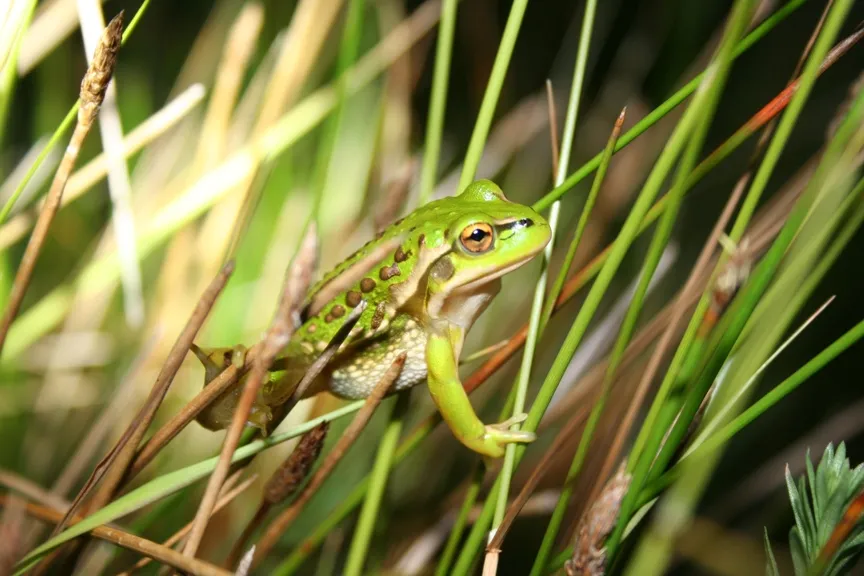


Last spring, a ‘chorus’ of growling grass frogs were heard at a new Nature Glenelg Trust wetland restoration site for the first time, a hopeful sign for the vulnerable Australian amphibian.
Picture: Department of Environment & Primary Industry
The growling grass frog, also known as the southern bell frog or warty swamp frog, is hard to miss if you’re lucky enough to hear one in the wetlands.
Their call has been described as sounding like a motorbike!
Green and gold, with warty skin and a distinctive growl, it was once widespread across southeastern Australia.
Over the past few decades, though, conservationists have watched its numbers fall. It’s been listed as nationally vulnerable by the Australian Government for more than 25 years.
Wetland loss and fragmentation, disease and introduced predators have all played a part.
So, seeing one at a site for the first time was not something the team at Nature Glenelg Trust, a Bank Australia customer, took lightly.
According to Mark Bachmann, founder and managing director of Nature Glenelg Trust, the confirmation of a growling grass frog at Wirey Swamp represents a positive step for a species that has faced many setbacks.
It is also a reminder that carefully planned restoration can create the conditions native species need to re-establish and thrive, heexplains.
"We think there was a very small population there, barely hanging on. Through already removing cattle grazing from the wetland and our future habitat restoration plans, we can safeguard and expand this population.”
Why habitat matters to growling grass frogs
The growling grass frog – or ‘growler’, as it’s affectionately named by conservationists – relies on networks of connected wetlands, Mark explains.
"It can move through and utilise multiple wetlands in a landscape rather than staying in one place, especially during wet periods.
"When wetlands are isolated or degraded, populations can become vulnerable and decline quickly, leading to local extinctions," he says.
The species is also susceptible to chytrid fungus, which has affected frogs across Australia since the 1990s, and to introduced fish species that prey on tadpoles and adults.
Restoring wetland habitats is slow, deliberate work.
It involves re-establishing wetland hydrology, managing vegetation, reducing pressures from introduced predators and livestock, and monitoring water quality.
It also involves patience and hope that local wildlife can return if conditions allow it.
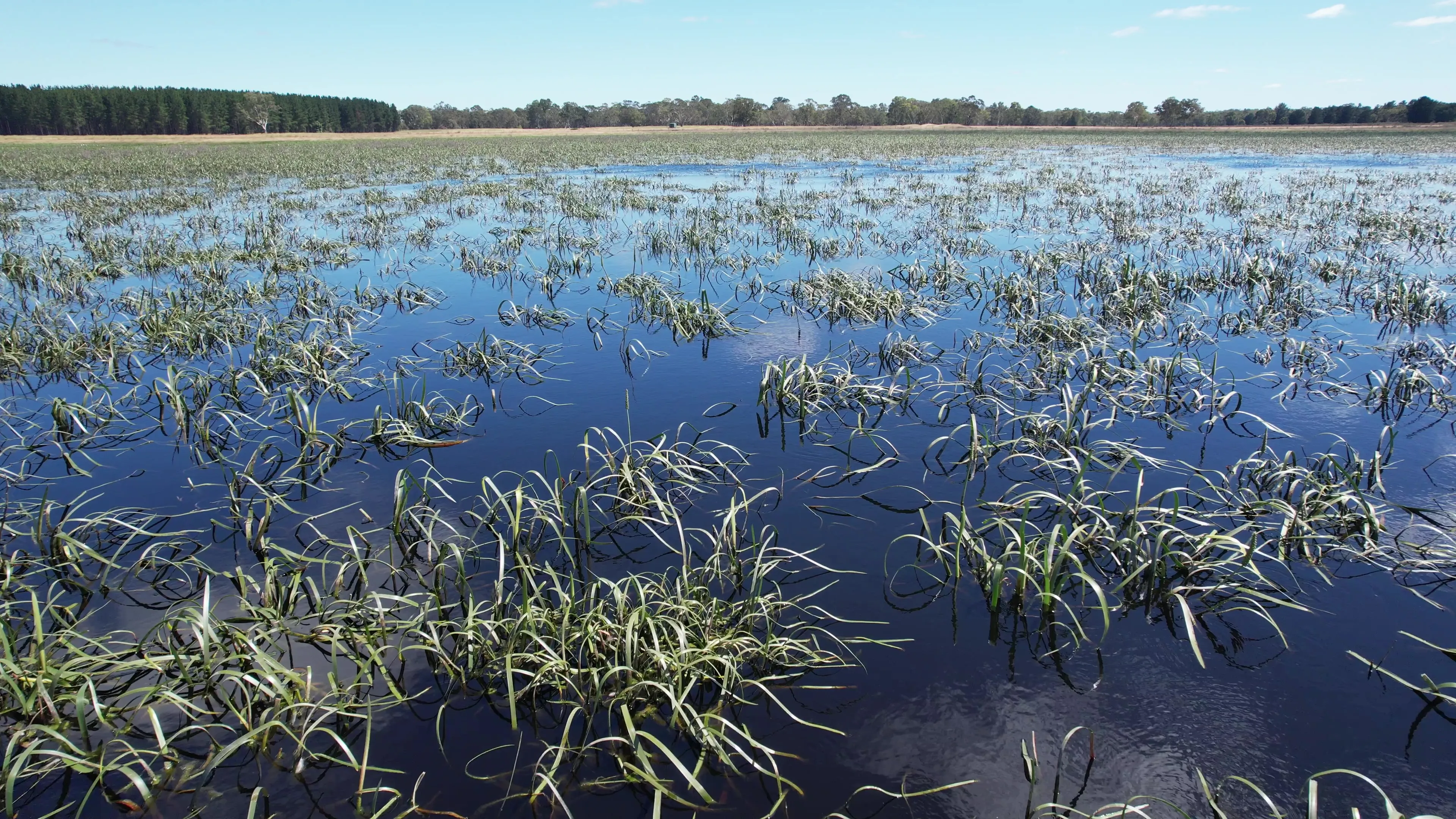
What’s been happening at Wirey Swamp
With community support, Nature Glenelg Trust has been restoring natural landscapes across south-eastern Australia since 2011.
Their work covers wetlands, threatened species habitats and biodiverse revegetation projects throughout regions including South Australia, Victoria, Tasmania and New South Wales.
Wirey Swamp, located in the Strathdownie district of western Victoria, is one of their most recently created restoration reserves.
Here, the team has been rebuilding the ecological foundations of the wetland.
Last spring, they heard growlers calling for the first time, and later, at a supporter event, they were able to actually capture one during a survey of the wetland.
“It is incredibly exciting because it confirms that the work we’ve commenced at the site is making a difference”, says Mark.
“Now that we have announced the expansion of the new Reserve to cover three wetlands, we have the building blocks in place for a successful restoration project that will secure the future viability of this recently discovered population.”
A moment for frogs everywhere
World Frog Day is a chance to acknowledge the challenges frogs face and the role they play in ecosystems.
Frogs are among the most threatened groups of animals globally, but stories like the one at Wirey Swamp show that positive change is possible, even if it is incremental.
A single confirmed growling grass frog sighting does not reverse decades of habitat loss, nor does it imply that the species is safe.
But it highlights that habitat restoration efforts can create the opportunities for natural recovery that our wildlife desperately need, says Mark
For Wirey Swamp, it is a reminder that giving nature a chance can make a difference.
Happy World Frog Day!

LiamNeal-00375.jpg)
LiamNeal-02225.jpg)
-1200x800-5b2df79.jpg)

LiamNeal-00426.webp)

.webp)
LiamNeal-03695-1200x800-5b2df79.jpg)