{ "@context": "https://schema.org", "@type": "Article", "mainEntityOfPage": { "@type": "WebPage", "@id": "https://www.bankaust.com.au/blog/{{slug}}" }, "headline": "{{title}}", "description": "{{desc}}", "image": "{{image}}", "author": { "@type": "Organization", "name": "Bank Australia", "url": "https://www.bankaust.com.au/" }, "publisher": { "@type": "Organization", "name": "Bank Australia", "logo": { "@type": "ImageObject", "url": "https://cdn.prod.website-files.com/64d5d5beb2a67e9491ecdff8/64d5d5beb2a67e9491ece00c_BA-logo-white.webp" } }, "datePublished": "{{datePublished}}", "dateModified": "{{dateModified}}" }
Skip to main content
No items found.
Back to blog
Money

Five ways you can stay smart online

Photo journal

It’s Stay Smart Online Week – here are some simple steps you can take to improve your online safety.

1. Limit what you share

Be careful about how much personal information you share online. Information like your date of birth or address can be used by criminals to steal your identity.

‍

2. Create strong passwords

Create strong passwords that are hard for others to guess. Weak passwords – like those with just a single word, or a sequence of numbers – are easy for criminals to guess using automated software.

One tip is to think of “passphrases” – sequences of at least 12 characters that include a combination of words, and include numbers, symbols, and both lower- and upper-case letters. Remember – the longer your password is, the stronger it is.

‍

3. Update your software

Keep your computers, phones and tablets updated with the latest software. Software updates often contain fixes for security threats, so by updating to the latest version, you’re protecting yourself from those threats.

‍

4. Back up your data

Some security threats like ransomware aim to stop you from accessing your files unless you pay a ransom. By regularly backing up your data, you’re giving yourself a back-up plan. If you have less data to lose, it can be easier to cope with an attack like this.

‍

5. Avoid online scams

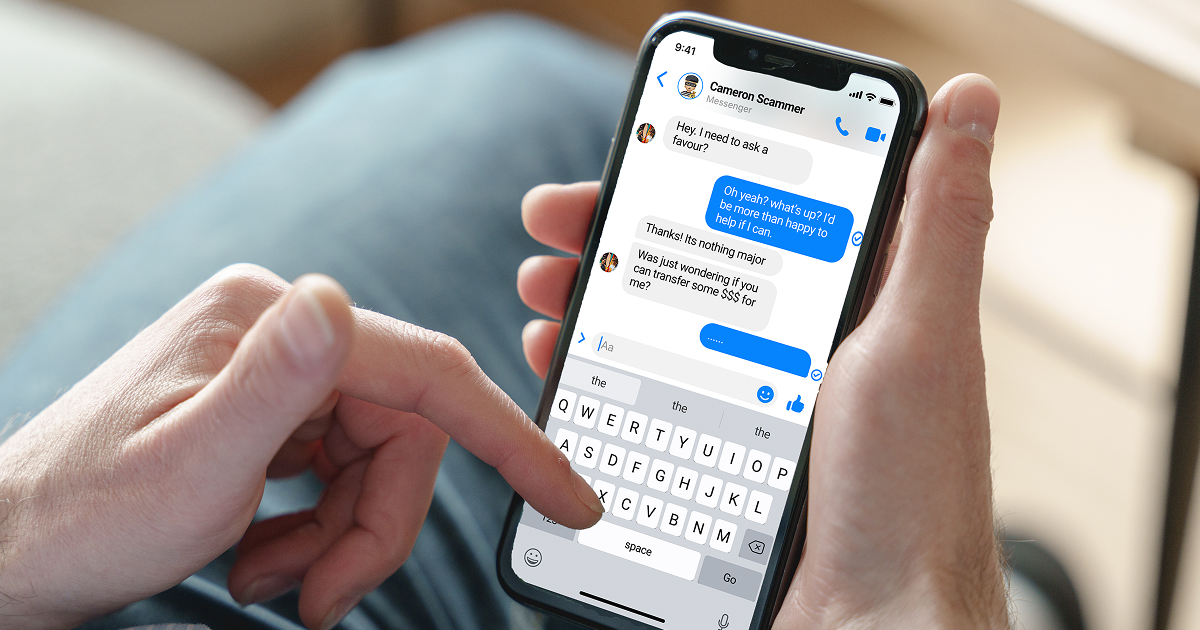
Be on the lookout for suspicious emails and messages. If you don’t know the sender, or you’re not expecting the email or message, always think twice before clicking on links or opening attachments.


If you're ever feeling unsure of any communication you have received, contact us directly on 132 888 or by sending a secure email via internet banking.

To find out more about how you can stay smart online, visit https://www.staysmartonline.gov.au/
Related stories

Money

Could your password already be exposed? A quick spring clean can help protect your accounts

Money

Planning an overseas trip? Here's how to stay safe from travel scams

Money

The $500 mistake: why scammers are paying for bank accounts and IDs

Money

Why this Depop scam doesn't look like a scam

Money

Anyone can be targeted: why intelligent people still fall for scams

People

Sustainable apartment trends in 2026: An expert's guide

Money

Cost of living: How to navigate financial anxiety in 2026

Money

6 expert tips for how to talk to your partner about money

Money

QR code scams are rising in Australia. Here’s how to protect yourself

QR code scams are increasing across Australia. Learn how quishing works, where fake QR codes appear, the red flags to look for, and how to protect your money and device.

Money

How to turn your eco-friendly upgrades into a reduced home loan rate

Money

Electric vehicles are more affordable than ever, here's how Bank Australia’s EV car loan works

Money

The RBA, the cash rate, and why your interest rate changes

When the RBA moves rates, why does your home loan or savings rate change? Here's a plain-language explanation of how it actually works.

Money

Money mule scams: What to do if someone asks you to transfer money

Money mule scams don't always look like scams. Here's what they look like, why they're so common, and what to do if you've been approached.

Planet

How to cook without gas and cut energy bills

Gas prices keep rising, and while induction can feel unfamiliar if you grew up cooking on a flame, it’s easier than you think to make the switch.

Money

Mobile porting scams: How to protect your phone and your bank account

Stop scammers from stealing your phone number. Learn the warning signs of mobile porting fraud and how to secure your Bank Australia account.

Money

What to do when someone you love is caught up in a romance scam: steps that actually help

Learn the key signs someone you love is caught in a romance scam. Discover expert tips, behaviour changes to watch for, and steps to safely support them.

Money

Facebook Marketplace and Gumtree scams are rising: Most losses under $300

Marketplace scams are on the rise in Australia, with small‑value losses becoming increasingly common. Learn the key warning signs, who scammers are targeting in 2026, and practical steps to protect yourself when buying or selling online.

Read more tips for staying safe online

Money

Road trip safety in Australia: Tips for summer, easter and year-round travel

Planning an Australian road trip? Discover essential safety tips, EV charging advice, and insurance checks to keep your journey stress-free and sustainable—perfect for summer holidays, Easter camping trips, and year-round adventures.

Money

Achieving your financial resolutions in 2026

Whether it’s understanding where your money goes or reviewing your “set and forget” expenses, we get a financial planner’s thoughts on how to better understand, manage and streamline our finances in the year ahead.

Money

5 schemes and grants for first home buyers in Australia