.svg)


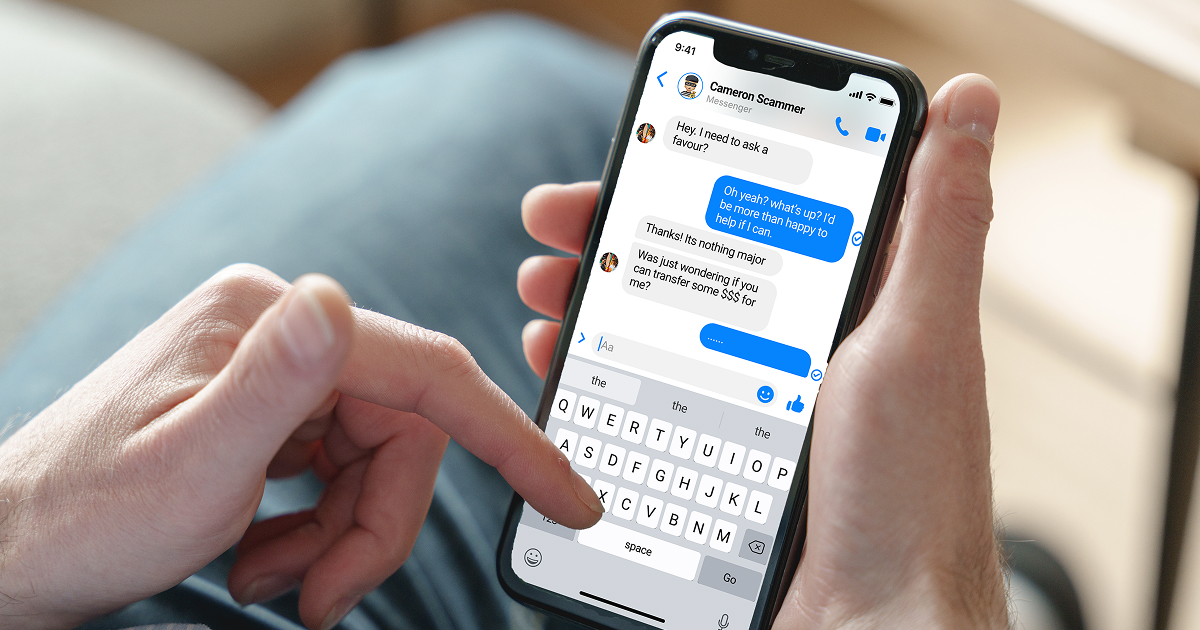


It might arrive as a job offer, a favour from someone you've been chatting with online, or a message from a "friend" in a bind. The details vary, but the request is usually the same: can you receive some money into your account and pass it on?
It sounds simple. Sometimes it can even sound helpful.
But this is one of the most damaging scam types operating in Australia right now, and, according to fraud experts it's designed specifically to feel like something it isn't.
If an online friend, a new employer, or an acquaintance asks to process funds through your personal bank account, stop.
While it might look like a harmless favor or a legitimate work-from-home task, this is the exact mechanism of a **money mule scam** (a form of money laundering).
What is a money mule?
A money mule is someone who receives stolen money into their personal bank account and then transfers it elsewhere—often overseas or into cryptocurrency—on behalf of criminals.
The person whose account is used (the "mule") is often completely unaware that anything criminal is happening, according to Scamwatch.
They think they're doing a job, helping someone out, or following a reasonable request from someone they trust.
The mechanics are usually the same: money is deposited into a personal bank account, and the account holder is then asked to transfer it somewhere else: another account, a cryptocurrency wallet, or sometimes convert it into gift cards.
Sometimes the person receives a small commission as payment for their help.
That commission is part of the design as it helps to make the arrangement feel legitimate, even helpful.
How does someone end up in this situation?
There's no single entry point.
Criminals recruit money mules through a mix of deception, pressure and the promise of financial gain.
Some people are approached through fake job advertisements on social media, offering remote work with titles like "finance agent," "payment processor," or "bookkeeper."
Others are drawn in through online relationships, a person they've met on a dating app or social platform who, over time, asks them to help move some money.
Read more about what to do if you or someone you know has been caught up in romance scam.
Others receive what looks like a message from a friend asking for help in an emergency.
What these approaches share is that they exploit trust, in an employer, a romantic interest, or a mate, to make a request that would otherwise seem alarming feel like a natural next step.
"Scammers create detailed, convincing stories to rationalise why they need you to take a specific action, and in the moment their explanations can sound legitimate," says Gabrielle, a fraud and investigations analyst at Bank Australia.
She notes that the approaches are designed to feel low-risk.
Because the person isn't sending their own funds, it can feel helpful rather than harmful.
Bank Australia is also seeing an emerging pattern in online gaming, where players are encouraged to share bank account access to earn credits or receive small payments, an avenue that can quietly become a channel for moving fraudulently-obtained money.

What most people don't realise about money mule scams
Under Australian anti-money laundering and counter-terrorism financing laws, money muling is considered criminal activity.
A money mule can be witting, unwitting, or complicit, and even if someone is unaware of what's happening, they can still be held legally responsible.
"Transferring money or providing access to your bank account, even if you believe the request is genuine, can contribute to a criminal ecosystem," says Gabrielle.
"Money laundering is a serious criminal offence, and individuals who move stolen money or allow someone else to use their account may still be held responsible, even if they didn't initially understand the full situation."
Money laundering carries a maximum penalty of life imprisonment in Australia.
The Australian Federal Police include that figure because it reflects how seriously the law treats the movement of stolen funds, regardless of whether the person involved understood what they were part of.
Being caught up in a money mule scam can also have serious immediate consequences: your bank account may be suspended or closed, your credit record affected, and in some cases your legal standing put at risk.
The red flags to know about money mule scams
There are some consistent signals that should give anyone pause, according to Scamwatch:
- Being contacted out of nowhere through text or a platform like WhatsApp, Signal or Telegram
- Being told you can earn good money for minimal effort
- Going through a "hiring process" with no real interview or questions about your background
- Being asked to top up an account with your own money before you can start earning
- Being told to pay a fee before any work begins
- Being encouraged to share bank account access in exchange for game credits or small payments through online gaming platforms
But the clearest signal, regardless of how the conversation started, is this: if someone is asking you to receive money and send it somewhere else, for any reason, with any explanation, stop.
"If you receive a message asking you to move money or take urgent action, pause and think: does this request make sense, and could it be a scam?" says Gabrielle.
"Taking a moment to check can prevent serious harm."
Before acting, she recommends verifying any request through official channels, contacting the organisation directly using the number or email on their website, or speaking to someone in person, and researching any employer or organisation before agreeing to anything.
No matter how convincing the story, your account is yours.
It isn't a payment processing tool for someone you've never met in person.
What to do if you've been approached, or if you've already transferred money
If you've received a request like this but haven't acted on it yet: don't. Remember Scamwatch's saying: Stop. Check. Protect.
Report it to Scamwatch and to the platform where the contact was made.
You don't need to feel embarrassed for receiving it, Gabrielle explains, these approaches are sophisticated and they arrive in ordinary-looking formats every day.
If you've already transferred money, time matters.
Contact Bank Australia immediately
Send us a message or call us on 132 888 Monday to Friday 8:00am-8:00pmSaturday 9:00am-2:00pm AEST/AEDT.
The sooner the bank knows, the better the chance of limiting the damage.
Also report to Scamwatch and, if you've shared personal documents, contact IDCARE at idcare.org for identity recovery support.
Getting help fast is the most important thing you can do.
LiamNeal-09381-1200x800-5b2df79.jpg)
LiamNeal-02154-1200x800-5b2df79.jpg)
LiamNeal-04850-1200x800-5b2df79.jpg)