.svg)





What boils water faster: induction or gas? We put both to the test to discover which cooktop reigns supreme in speed, energy efficiency, and indoor environmental safety.
With cost of living and household running costsfront of mind for many Australians, the kitchen may be worth a closer look whenit comes to saving money each month.
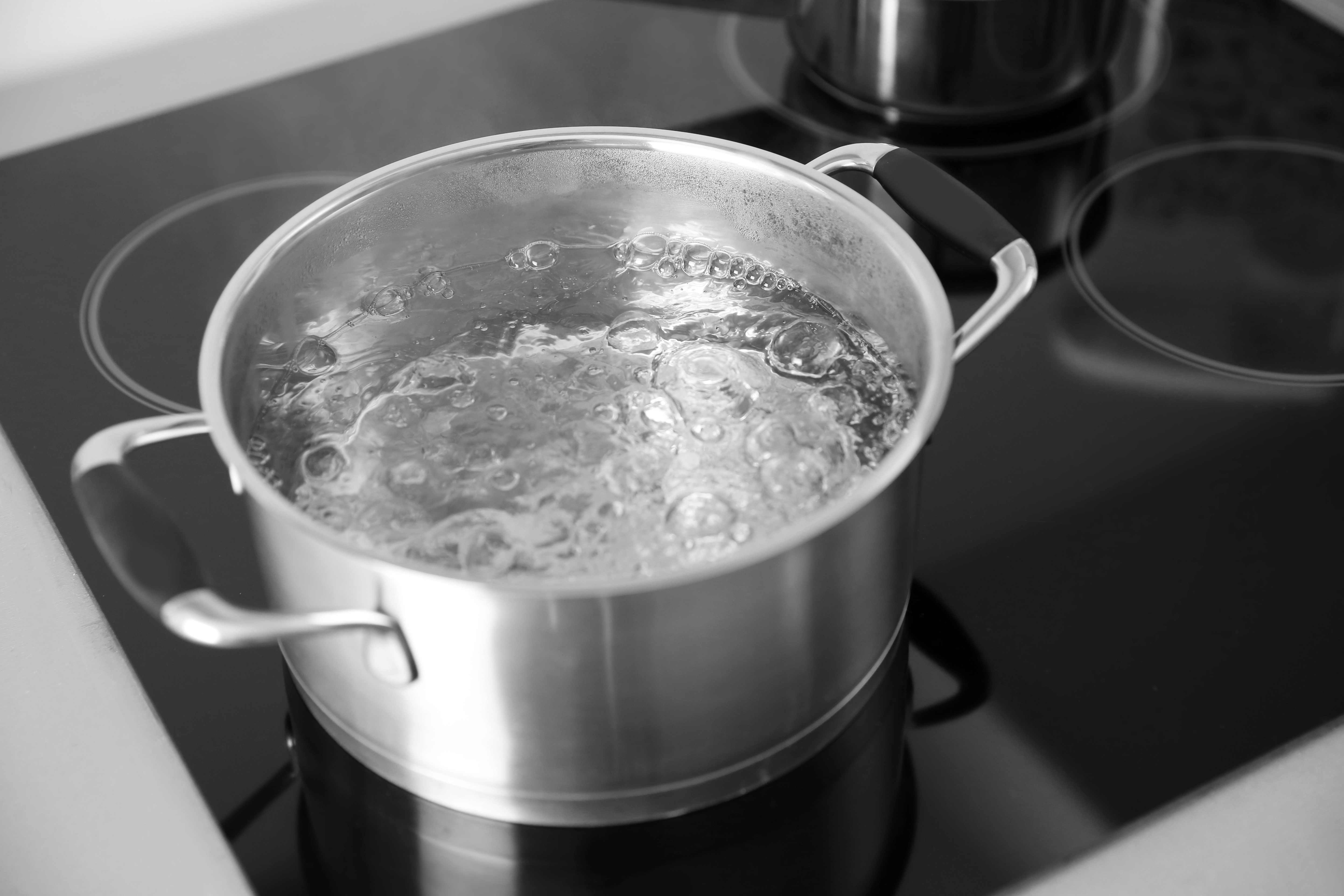
Our team put induction and gas head-to-head in a (non-scientific!)boiling water test to see how the two compared, and the gap was bigger than we expected.
The test
To keep things as fair as possible outside of a lab, we used the same conditions for both:
- 500ml of cold water (two standard cups)
- The same unlidded stainless steel saucepan for both tests, starting from cold
- The highest heat setting on an equivalent sized hob
The results were definitive, showing a dramatic efficiency gap between the two technologies.
The results
Here's what we found:
- Induction: 1 minute and 16 seconds
- Gas: 5 minutes and 9 seconds
The Verdict: Induction achieved a rolling boil 3 minutes and 53 seconds faster than gas, reducing overall boiling time by over 75%.
Why can induction boil water so much faster?
Gas and standard electric cooktops generate heat externally, using an open flame or a heating element, and transfer it to the base of the pan.
What many of us don’t realise is that a significant amount of that energy can escape into the surrounding air before it ever reaches your food (or water).
Induction works differently. According toenergy.vic.gov, rather than heating from outside the pan, it generates heat directly inside the cookware using electromagnetism.
Here's how:
Energy.vic.gov.au explains the induction unit creates an alternating current beneath the glass surface, creating a magnetic field.
They say that when you place a compatible pan on the hob, that field induces electrical currents inside the base of the pan.
The metal within the pan becomes the heating element. The cooktop surface itself stays relatively cool.
What induction means in practice
1. Lower energy bills
According to the Victorian Government's Victorian Energy Upgrades program, induction cooktops are around 3 times more energy efficient.
They also say that using less energy means lower running costs, and households that remove all gas appliances can save around $350to $400 a year and avoid ongoing gas supply charges.
2. A cooler kitchen in summer
By their nature, gas burners can radiate heat outward into the room.
Because induction heats the cookware directly rather than the surrounding surface or air, your kitchen may stay cooler, which can make a real difference on hot days.
3. Better air quality at home
According to a report from Victoria's Chief Health Officer, homes that use gas appliances for cooking have higher levels of nitrogen dioxide, carbon monoxide, PM2.5, formaldehyde and benzene than homes using electric cooking appliances.
The Australian Journal of General Practice said in 2022 that gas stove use is estimated to cause 12% of childhood asthma in Australia.
Do I need to buy new cookware
Not necessarily.
Induction requires cookware with a ferrous, or iron-containing, metal base, such as cast iron, enamelled iron, or stainless steel that contains enough iron to be magnetic.
Aluminium and copper generally don't work unless they have a magnetised base layer.
How to check if pans will work with an induction cooktop
The quickest way to check is to hold a magnet to the bottom of your pan. If it sticks firmly, you're good to go to use induction.
You don't have to replace your whole stove
If a full cooktop replacement isn't practical or in the budget right now, a portable cooktop is a low-cost way to start cooking with induction without any installation.
Portable induction units plug into a standard power point, safely sit on the benchtop, and can do everything a built-in induction hob can.
According to CHOICE, you can expect to pay between around $60 and $385 for a portable induction cooktop in Australia.
For renters, this also means you can take it with them if you move.
If you do decide to upgrade to a full built-in induction cooktop and you're replacing agas cooktop, it's worth checking whether you're eligible for a rebate first.
State government programs may offer discounts on eligible induction cooktops for households replacing a gas cooktop, including in private rental properties.
LiamNeal-09381-1200x800-5b2df79.jpg)
LiamNeal-02154-1200x800-5b2df79.jpg)
LiamNeal-04850-1200x800-5b2df79.jpg)







LiamNeal-0224-1200x799-779f864.jpg)