.svg)


Motivated by a shared desire to help their communities overcome racial barriers in the workplace, Bank Australia community customer grant recipients Priyanka Ashraf and Grace Mugabe founded the finance education program ‘Future Fit’. We speak to the pair about how they are equipping Black and Women of Colour to do business.
For many Melburnians, the 2020 COVID lockdowns shrunk the world down to whatever was happening inside their own four walls. But Priyanka Ashraf was focused on what was going on outside of her home. Painfully aware of the employment challenges being faced by marginalised groups – most pressingly, international students who lacked government support – she co-founded creative agency The Creative Co-operative to support Black and Women of Colour (BWoC) into paid work.
“We'd coach them, we'd mentor them, we'd pay them to do the work for briefs we were working on, and often they’d go on to employment with some of our clients,” Priyanka explains.
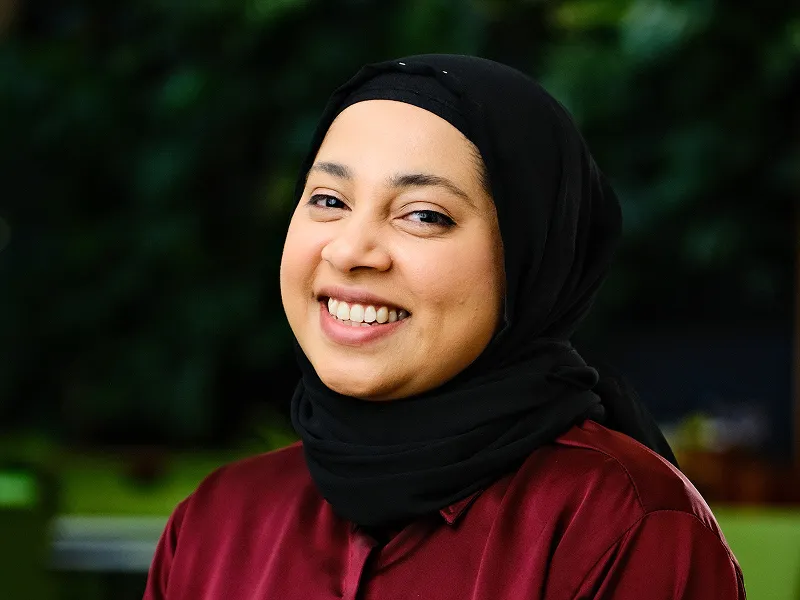
But a common theme was emerging within the communities The Creative Co-Operative was supporting: increasingly, women were expressing a desire to start their own business or develop entrepreneurial skills. “Although you've got Black and Women of Colour that are in the workforce,” Priyanka says, “they face a lot of systematic racism, so working for themselves becomes very appealing.”
In response, The Creative Co-Operative started running capacity-building programs, and fortuitously, this pivot led Priyanka to Grace Mugabe, the CEO of Financially Empowered. The Perth-based organisation focuses on supporting women, migrants and other under-represented groups to be financially literate. Grace’s extensive background supporting and educating marginalised communities made her the perfect fit to deliver financial advice within the workshops.
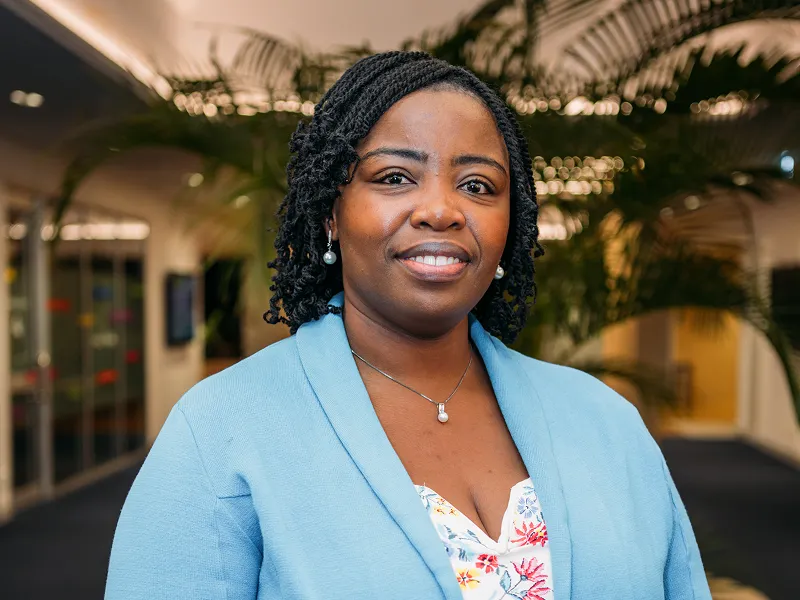
Grace and Priyanka instantly recognised their shared values and a drive to create systemic change. “Both of our organisations are social enterprises,” says Priyanka. “So our motivation for the work we both do comes from very real lived experience, and a desire to ensure people from our communities don’t have to go through the same thing we did.”
Supported by a Bank Australia community customer grant, the pair joined forces to launch ‘Future Fit’, a 12-week program designed to empower BWoC with the skills, tools and confidence needed when looking for a job or running their own business.
While these skills include the practical – from technical expertise to creating an ATO-compliant invoice – they also extend beyond what is usually available in this space. “What we’re aiming to do is support the women who are trying to overcome discriminatory barriers with the right knowledge, tips, tools, tactics, information networks, and guide them on how to navigate racism within business as well,” explains Priyanka.

Run by BWoC, the program is delivered with consideration for the myriad cultural and religious paradigms of each individual participant – something that would rarely, if ever, factor into traditional educational coursework. “Take the religious context for example: in Islam earning interest is considered haram, but any other financial literacy workshop wouldn’t take this into account when giving advice,” Grace explains. This same bespoke consideration is made for all participants, no matter their background.
“Also,” Grace adds, “the fact that ‘Future Fit’ is being run by Black and Women of Colour, shows participants what is possible. And sometimes just seeing that helps more than telling someone what their potential is.”
Along with skillbuilding, the program also aims to foster a sense of community. By creating a supportive network, participants are encouraged to collaborate and uplift one another, breaking down barriers that often exist in competitive, capitalist environments.
“With all of the work that we are doing, it's about trying to build a community and trying to create a safe space to support one another,” says Priyanka. This sense of community is a key to forging success long term. “We want people to feel confident enough in the skills that they learn to apply them going forward, and feel like they can thrive whether we are there or not”
This collaborative and communal mindset is an underpinning philosophy for Priyanka and Grace, both in the work they do together and the ‘Future Fit’ program itself.

“We really have to have an abundance mindset and remember that we can achieve so much more when we work together,” says Priyanka. “We don't have to compete. Even though we’re in a system that tricks us into thinking that that's the case, it's just not true. We're stronger when we collaborate.”